
Gaming
Chicago Bears vs Green Bay Packers Match Player Stats: In-Depth Analysis of the 2026 NFC Wild Card Thriller

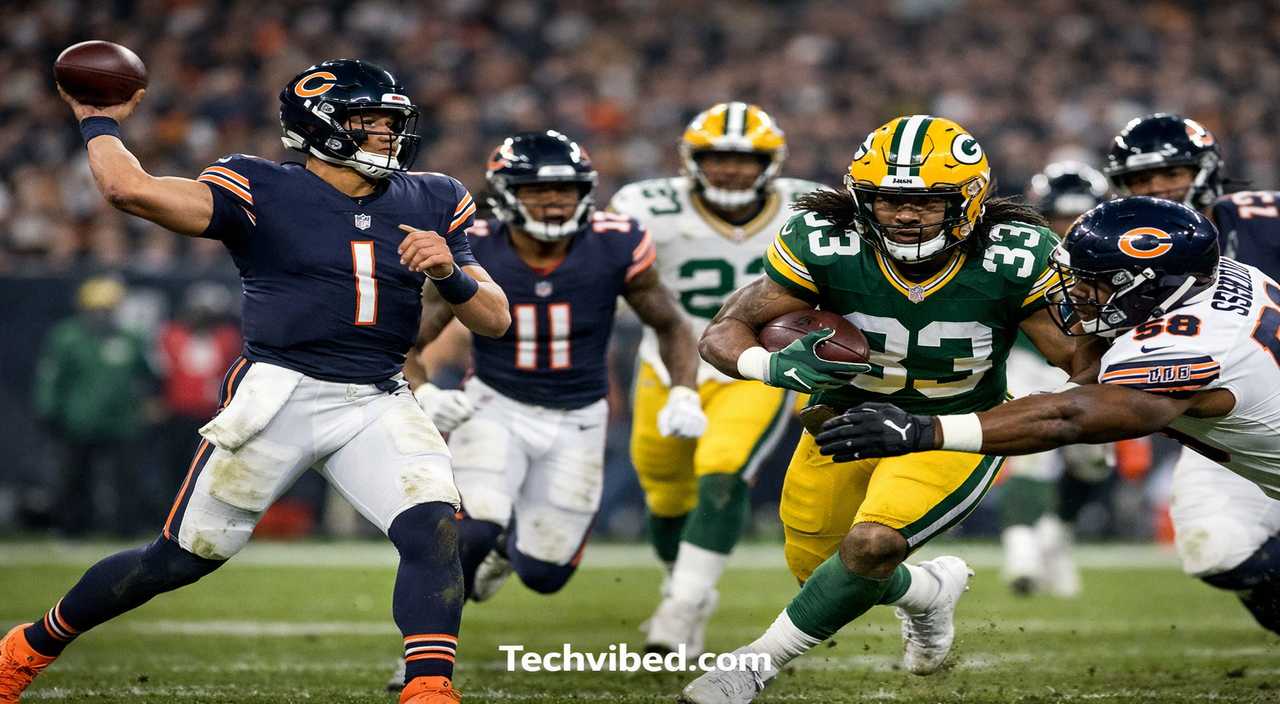
The Chicago Bears and Green Bay Packers have one of the oldest rivalries in the NFL. Their latest clash came in the 2026 NFC Wild Card playoff game on January 10, 2026, at Soldier Field. The Bears pulled off a stunning 31-27 comeback win after trailing 21-3 at halftime. This match showcased impressive Chicago Bears vs Green Bay Packers match player stats, with quarterbacks Caleb Williams and Jordan Love putting up big numbers. Fans saw a mix of strong passing games, key rushes, and defensive plays that turned the tide. This post breaks down the stats in detail to help you understand what made this game special.
The game started slow for the Bears, who scored just a field goal in the first quarter. The Packers built a solid lead with three touchdowns in the first half. But the Bears fought back in the fourth quarter, scoring 25 points to seal the victory. Time of possession favored the Bears at 32:41 compared to the Packers’ 27:19. The Bears had 24 first downs, while the Packers had 21. Third-down conversions were 10-of-19 for Chicago and 6-of-15 for Green Bay. Total yards were close, with Chicago at 445 and Green Bay at 421. These team stats highlight how the Bears controlled the game late.
Game Overview
The Bears opened with a long 16-play drive ending in a 27-yard field goal by Cairo Santos, taking a 3-0 lead. The Packers answered with a 9-play, 85-yard drive, capped by a 7-yard touchdown pass from Jordan Love to Christian Watson. In the second quarter, Love threw an 18-yard touchdown to Jayden Reed after a Bears turnover on downs. Later, Love found Romeo Doubs for a 1-yard score after a fumble recovery near the goal line. The Packers led 21-3 at halftime. The third quarter saw the Bears add a 34-yard field goal, making it 21-6. The fourth quarter was all Bears, with 25 points including touchdowns by D’Andre Swift, Olamide Zaccheaus, and DJ Moore.
Key moments included the Packers’ defense forcing two interceptions in the first half, one by Carrington Valentine and another by Tyrel Hopper. The Bears’ comeback started with a strip sack by Lukas Van Ness, leading to a field goal. Devin Duvernay’s 37-yard punt return set up good field position. Late in the game, the Packers missed two field goals, including a 44-yarder that could have tied it. Williams’ 25-yard touchdown pass to Moore with 1:43 left gave the Bears the lead. The Packers’ final drive ended with incomplete passes. This game marked the Bears’ biggest playoff comeback ever, overcoming an 18-point deficit.
Will You Check This Article: Chicago Bears vs 49ers Match Player Stats: Detailed Breakdown of the December 28, 2025 Game
Chicago Bears Offensive Stats
Passing Stats
Caleb Williams led the Bears’ passing attack, completing 24 of 48 attempts for 361 yards, two touchdowns, and two interceptions. His passer rating was 71.6. Williams showed grit in the fourth quarter, throwing both touchdowns during the comeback. He also added 20 rushing yards on four carries. This performance set a Bears postseason record for passing yards, beating Mitchell Trubisky’s 303 yards from 2019. It was Williams’ highest yardage in the 2025 season and second-highest in his career. His ability to extend plays with his legs helped on key downs. Overall, the Bears’ net passing yards were 352, showing a strong aerial game despite early struggles.
Rushing Stats
The Bears’ rushing game totaled 93 net yards on 28 carries. D’Andre Swift was the top rusher with 13 attempts for 54 yards and one touchdown, his longest run being 8 yards. Kyle Monangai added 8 carries for 27 yards, with a long of 9 yards. Williams contributed 20 yards on 4 scrambles. Cole Kmet had 1 yard on one carry, while Laviska Burden III and DJ Moore had negative yards on end-arounds. The rushing attack picked up in the second half, helping control the clock. Swift’s 5-yard touchdown run in the fourth quarter was crucial, cutting the deficit to 21-16. This balanced approach supported the passing game late.
Receiving Stats
Colston Loveland stood out with 8 receptions on 15 targets for 137 yards, his longest catch 29 yards. DJ Moore caught 6 of 7 targets for 64 yards and one touchdown, with a 25-yard long. Rome Odunze had 2 catches for 44 yards, Laviska Burden III 3 for 42 yards. Swift added 2 receptions for 38 yards, Monangai 1 for 22 yards. Olamide Zaccheaus scored on an 8-yard catch. Durham Smythe had 1 catch for 6 yards. Loveland’s performance made him the first rookie tight end in NFL history with 8 catches and 100 yards in a playoff game. His yards rank second in Bears postseason history for a receiver.
Green Bay Packers Offensive Stats
Passing Stats
Jordan Love completed 24 of 46 passes for 323 yards, four touchdowns, and no interceptions, earning a 103.8 passer rating. He added 11 rushing yards on one scramble. Love’s four touchdowns tied a Packers playoff record shared with Aaron Rodgers, Lynn Dickey, and Bart Starr. This was his second playoff game with three or more touchdown passes, joining Rodgers, Favre, and Starr. Love became one of three quarterbacks since 1970 to have nine wins and 25 passing touchdowns in each of his first three starting seasons. Despite the loss, his clean game with no picks was notable. The Packers’ net passing yards were 322.
Rushing Stats
The Packers rushed for 99 net yards on 23 carries. Josh Jacobs led with 19 attempts for 55 yards, his longest 13 yards. Chris Brooks had 1 carry for 16 yards, Jayden Reed 1 for 14 yards, Love 1 for 11 yards, and Emanuel Wilson 1 for 3 yards. Jacobs’ runs were stronger in the first half, setting up passing plays. The ground game slowed after halftime, contributing to the collapse. No rushing touchdowns, but it helped in time management early. Jacobs fumbled a kickoff return, but it was recovered by his team. This rushing output supported Love’s passing but lacked big plays late.
Receiving Stats
Romeo Doubs caught 8 of 11 targets for 124 yards and one touchdown, with a 34-yard long. Matthew Golden had 4 catches for 84 yards and one score, longest 36 yards. Jayden Reed grabbed 4 for 43 yards and a touchdown, long 20 yards. Christian Watson had 3 for 36 yards and a touchdown, long 22 yards. Brooks 1 for 11, Luke Musgrave 1 for 9, Josh Whyle 1 for 7, David Kinnard 1 for 6, Jacobs 1 for 3. Doubs’ one-handed 34-yard catch was a highlight. The receivers spread the field well, but second-half stalls hurt. Four different receivers scored touchdowns.
Defensive Stats for Both Teams
The Packers’ defense recorded one sack by Lukas Van Ness and two interceptions: one by Carrington Valentine and one by Tyrel Hopper. Edgerrin Cooper led tackles with 6 solo and 2 assists. Evan Williams had 6-1, Keisean Nixon 4-2. They forced one fumble but recovered none lost. The Bears’ defense had one sack by Amen Ogbongbemiga and no interceptions. Tremaine Edmunds led with 5-1 tackles, Jaquan Brisker 5-4. They forced four fumbles from the Packers but lost none themselves. Both teams had solid tackle numbers, but the Bears’ low penalties (2 for 5 yards) helped. The Packers had 7 penalties for 65 yards. Defensive plays were key in turnovers.
Special Teams and Key Plays
Cairo Santos was perfect for the Bears, making all three field goals (longest 51 yards, a postseason record for Chicago) and two extra points. The Packers’ Brandon McManus missed two field goals and one extra point. Daniel Whelan punted four times for the Packers, averaging 48.8 yards with one inside the 20. The Bears had no punts, a first in their postseason history. Devin Duvernay’s 37-yard punt return was the second-longest in Bears playoff history. Kickoff returns included Keisean Nixon’s 28-yard for Green Bay. These special teams moments, like missed kicks and big returns, shifted momentum. The Bears’ perfect kicking was vital in the comeback.
Related: Tennessee Titans vs Jacksonville Jaguars Match Player Stats: A Detailed Breakdown
Standout Players and Performances
Caleb Williams earned praise for his 361-yard game, leading seven game-winning drives this season, tied for most by a young quarterback since 1950. Colston Loveland’s 137 yards set rookie records. For the Packers, Jordan Love’s four touchdowns without interceptions made him just the third quarterback to lose a playoff game with those stats. Romeo Doubs’ 124 yards included key catches. D’Andre Swift’s all-around play with 54 rush yards, a touchdown, and 38 receiving yards was crucial. Defensively, Van Ness’ strip sack sparked the Bears. These players’ efforts highlight the high level of Chicago Bears vs Green Bay Packers match player stats in this game.
Historical Context and Records Set
This win was the Bears’ fourth-largest comeback ever and biggest in playoffs. They became the fourth team to rally from 15+ points in the fourth quarter of a playoff game since Super Bowl LI. The 25 fourth-quarter points are third-most in NFL playoff history. Ben Johnson became the first Bears coach to win a postseason game in his debut year. The Bears scored 21+ points in their last four games against the Packers, longest streak since 1949-1952. They won without a takeaway, rare for a team that led the league with 33 in the regular season. Fewest penalties (5 yards) since 2020. These records add depth to the rivalry’s history.
Conclusion
This Chicago Bears vs Green Bay Packers match player stats breakdown shows a game full of drama and skill. The Bears’ comeback from 18 points down highlights their resilience under pressure. Key stats like Williams’ 361 yards and Love’s four touchdowns define the contest. Defensive turnovers and special teams plays were decisive. For fans, this playoff thriller adds another chapter to the rivalry. If you’re analyzing team strategies or player growth, these details provide a full picture. Keep an eye on both teams as the Bears advance in the playoffs.
Share this content:

Jipinfeiche is the Chinese name for the popular racing game series known as Need for Speed. This term translates roughly to “extreme quality flying car,” which captures the high-speed action and top-tier cars in the games. Many players in China and other parts of Asia refer to the series as jipinfeiche. The franchise started in 1994 and has grown into one of the biggest names in video games. It mixes fast racing with car customization and police chases. Over the years, it has sold millions of copies worldwide. This guide covers its history, key features, and tips to help you get the most out of it.
What is Jipinfeiche?
Jipinfeiche refers to the Need for Speed series, a set of racing video games made by Electronic Arts. The name jipinfeiche comes from Chinese characters that highlight the thrill of speeding in powerful vehicles. In English, it’s just called Need for Speed, or NFS for short. The games let players drive real-life cars in races, chases, and challenges. You can pick from sports cars, muscle cars, and tuners. The series stands out because it blends arcade fun with some realistic driving feels. Players often modify their cars to go faster or look better. Jipinfeiche has versions on consoles, PCs, and mobile devices, making it easy for anyone to play.
The appeal of jipinfeiche lies in its mix of speed and story. Some games have plots where you rise from a street racer to a legend. Others focus on pure competition. The series has changed over time to keep things fresh. For example, early games were about point-to-point races, while later ones added open worlds where you can drive freely. Jipinfeiche also includes multiplayer modes for racing against friends online. It’s not just about winning races; it’s about building the perfect car and outrunning the cops. This keeps fans coming back for more.
The History of Jipinfeiche
The jipinfeiche series began in 1994 with the first game, The Need for Speed. Developed by EA Canada, it featured realistic car handling based on data from Road & Track magazine. Players raced on tracks set in different countries, with police pursuits adding excitement. Car damage was a big part, making races feel risky. The game came out on consoles like the 3DO and later on PlayStation. It set the tone for future titles by focusing on exotic cars and high speeds. Sales were strong, leading to quick sequels.
By the late 1990s, jipinfeiche expanded with games like Need for Speed II in 1997. This one added new modes, such as knockout races where the last car each lap gets eliminated. Tracks became more open, and the game included a wider range of cars. Then came Need for Speed III: Hot Pursuit in 1998, which let players switch between racer and cop. This feature became a staple in the series. High Stakes in 1999 introduced an economy system for buying and upgrading cars, plus tournaments with real stakes like losing your vehicle if you crash too much.
In 2000, Porsche Unleashed focused only on Porsche cars, offering a deep look at their history and models. It had a career mode where you progress through eras of Porsche racing. This shift showed how jipinfeiche could zoom in on specific brands. After that, the series moved toward arcade style with Hot Pursuit 2 in 2002, simplifying controls for more fun. Developers like EA Seattle helped with this change. These early years built a strong base for jipinfeiche, mixing simulation with action.
Will You Check This Article: Washington Commanders vs Chargers Match Player Stats: In-Depth Analysis
Key Games in the Jipinfeiche Series
The Underground Era
The Underground games marked a big shift for jipinfeiche. Need for Speed: Underground came out in 2003 and focused on street racing in city settings. It drew from the tuner culture, where players customize import cars with neon lights and body kits. No police in this one, but it added drag and drift modes. Drag racing is about straight-line speed and shifting gears right. Drift is scoring points by sliding around corners. The game had a story about climbing the ranks in an underground scene. It sold well and changed the series direction.
Underground 2 in 2004 built on this by adding an open world. You could drive around a city to find races, shops, and hidden events. Customization went further, with options for performance parts like engines and tires. Visual changes affected how magazines in the game featured your car. This made building a unique ride central to play. Jipinfeiche fans loved the night-time vibe and hip-hop soundtrack. It felt like living in a fast-paced urban world. These titles helped the series reach new players interested in car mods.
Most Wanted in 2005 is often seen as a peak for jipinfeiche. It brought back police chases in a big way. You race against a blacklist of rivals, beating them to take their cars. The open world of Rockport City lets you explore while evading cops. Pursuits build heat levels, making chases tougher over time. The game sold 16 million copies, making it the best-seller in the series. Its mix of story, action, and freedom set a standard for later games.
Modern Releases
Recent jipinfeiche games keep innovating. Need for Speed Heat in 2019 uses a day-night system. Daytime is for legal races to earn money, while night brings illegal events with police risks but better rewards. Cross-play was added in 2020, letting players on different platforms join together. The game has a vibrant Miami-inspired city with neon lights and street art.
Unbound in 2022 added a cel-shaded art style, mixing realistic cars with cartoon effects for bursts of speed. Set in Lakeshore City, it focuses on weekly challenges and building a crew. Multiplayer is seamless, with friends jumping into your world. Jipinfeiche now includes live updates with new cars and events. Mobile versions like No Limits from 2015 offer free-to-play racing on phones.
In 2024, a new mobile game called Need for Speed Mobile, known as Assemble in China, launched. Made by TiMi Studios, it brings open-world racing to phones with assembly features for cars. However, by 2025, development on the next main title paused as Criterion shifted focus. EA plans to bring back jipinfeiche later.
Gameplay Mechanics in Jipinfeiche
Jipinfeiche games center on driving fast cars in various modes. Basic controls include accelerating, braking, and steering. Many titles add nitrous boosts for short speed bursts. Cars handle differently based on type: sports cars turn sharp, muscle cars have raw power. Tuning lets you upgrade engines, suspension, and brakes for better performance. Visual mods like spoilers and paints don’t affect speed but make your car stand out.
Police chases are a core part in many jipinfeiche entries. You evade cops by smashing through roadblocks or using shortcuts. Heat levels rise with longer pursuits, bringing helicopters and spike strips. Some games let you play as police, using tools to stop racers. Open worlds allow free driving to find collectibles or start races. Multiplayer modes include online lobbies for competing in events or just cruising together.
Drift and drag are special modes. In drift, you slide around turns to chain combos for points. Drag requires perfect shifts to win straight races. Stories often involve rivalries or heists, with cutscenes advancing the plot. Jipinfeiche balances easy pick-up play with depth for serious fans through these features.
Tips and Tricks for Playing Jipinfeiche
To succeed in jipinfeiche, master car tuning first. Balance speed, acceleration, and handling based on race type. For drifts, lower tire pressure for better slides. In pursuits, use the map to find cooldown spots like gas stations to lose heat. Practice nitrous timing for straightaways to pull ahead.
Choose cars wisely. Tuners work well for city races with tight turns, while exotics shine on highways. In open worlds, explore to find shortcuts and upgrades. Online, team up with friends for crew events to share rewards. Watch replays to spot mistakes in your driving line.
For beginners, start on easier difficulties to learn tracks. As you progress, turn off assists like auto-brake for more control. Farm money in side events to buy better parts. In Heat or Unbound, manage risk: race safe during day, go bold at night. These tips help you climb leaderboards in jipinfeiche.
The Community Around Jipinfeiche
Fans of jipinfeiche form a lively community online. Forums and Reddit groups share custom car builds and race strategies. Modders create new content for PC versions, like extra tracks or vehicles. Events at gaming cons feature tournaments with prizes. Social media has clips of epic chases and drifts.
In China, where it’s called jipinfeiche, players host local meets inspired by the games. Mobile versions bring in casual fans who play on the go. Official updates often come from community feedback, adding requested features. This group keeps the series alive through fan art, stories, and discussions.
What’s Next for Jipinfeiche
The future of jipinfeiche looks promising despite pauses. EA has said they will revive the series after current projects. Mobile growth continues with titles like Assemble, reaching new players in Asia. Expect more cross-platform play and live events.
Advances in tech could bring better graphics and VR modes. Stories might get deeper with choices affecting outcomes. Jipinfeiche will likely keep its core of speed and customization while adding fresh ideas. Fans wait for announcements on the next big release.
Share this content:

The Washington Commanders faced the Los Angeles Chargers in a Week 5 NFL matchup on October 5, 2025, at SoFi Stadium. This game showcased strong defensive plays and key offensive drives that shaped the outcome. Fans searching for Washington Commanders vs Chargers match player stats will find a full breakdown here, covering individual performances across all positions. The Commanders overcame an early deficit to secure a convincing win, highlighting their growth under new strategies. This post offers a step-by-step look at stats, helping readers understand what drove the result. With detailed numbers from passing to defense, it goes beyond basic recaps to provide useful insights for fans and analysts alike.
Game Overview
Final Score and Key Moments
The final score was Washington Commanders 27, Los Angeles Chargers 10. The Chargers started strong, scoring first with a touchdown pass from Justin Herbert to Ladd McConkey and adding a field goal to lead 10-0 after the first quarter. But the Commanders turned things around in the second quarter. Jacory Croskey-Merritt scored on a 15-yard rush, and Matt Gay kicked a field goal to tie it at 10-10 by halftime. In the third quarter, Croskey-Merritt added another touchdown run, and Gay hit another field goal for a 20-10 lead. The fourth quarter sealed it with a touchdown pass from Jayden Daniels to Deebo Samuel. Key moments included two turnovers by the Chargers and Washington’s ability to control the clock with long drives.
Team Stats Comparison
Washington outgained Los Angeles with 389 total yards to 336. The Commanders had 22 first downs compared to the Chargers’ 18, and they forced two turnovers while committing just one. In rushing, Washington dominated with 163 yards at 5.8 yards per carry, while Los Angeles managed 155 yards at 5.7 per carry. Passing yards favored Washington at 226 net to the Chargers’ 181. Time of possession was close, but Washington’s defense sacked Herbert five times, disrupting their rhythm. Penalties were low for both, but the Commanders’ efficiency on third downs (45% conversion) helped sustain drives. This comparison shows Washington’s balanced attack overpowered the Chargers’ early momentum.
Washington Commanders Player Stats
Passing Stats
Jayden Daniels led the Commanders’ passing game, completing 15 of 26 attempts for 231 yards, one touchdown, and no interceptions. His average was 8.9 yards per attempt, with a quarterback rating of 100.0. Daniels faced one sack for a loss of five yards but showed poise under pressure, which was minimal at just 3.1% of dropbacks. His average depth of target was 10.5 yards, indicating a mix of short and deep throws. This performance marked his best of the season, with a 71.8 QBR ranking ninth in the league for Week 5. Daniels’ accuracy helped convert key third downs, keeping drives alive against a tough Chargers secondary.
Rushing Stats
Jacory Croskey-Merritt starred in the rushing attack, carrying the ball 14 times for 111 yards and two touchdowns, averaging 7.9 yards per carry. His longest run was 27 yards, and he forced three missed tackles while gaining 2.64 yards before contact per attempt. Daniels added 39 yards on eight carries, averaging 4.9 yards, providing a dual-threat element. Chris Rodriguez Jr. had five carries for seven yards, and Jeremy McNichols gained six on one attempt. The team’s 163 rushing yards came from 28 carries, with a 56.9% success rate overall. This ground game wore down the Chargers’ defense, opening up play-action passes and controlling the pace.
Receiving Stats
Deebo Samuel was the top receiver, catching eight of 11 targets for 96 yards and one touchdown, averaging 12.0 yards per catch. His longest reception was 22 yards, and he led with 42 yards after catch, forcing three missed tackles. Luke McCaffrey had one catch for 50 yards on two targets, showing big-play potential. Croskey-Merritt added two receptions for 39 yards, and Jaylin Lane caught one for 16. Other contributors included Jeremy McNichols (12 yards), John Bates (nine), and Tay Martin (nine). The group totaled 15 receptions for 231 yards, with a 15.4 average. Samuel’s versatility as a route runner and after-catch threat was crucial in stretching the field.
Will You Check This Article: From Blog PlayBattleSquare: Your Guide to Gaming Tips and Fun
Defensive Stats
Bobby Wagner anchored the defense with 14 total tackles, eight solo, and one quarterback hit. Mike Sainristil had nine tackles, seven solo, two passes defended, and one interception. Quan Martin also had nine tackles. Edge rushers shone: Dorance Armstrong with two sacks, Von Miller with 1.5, and Jer’Zhan Newton with one. The unit recorded five sacks, six tackles for loss, and four passes defended, holding the Chargers to 181 passing yards and a 38.5% success rate. Their pressure rate disrupted Herbert, leading to two turnovers, including a fumble recovery by Marshon Lattimore. This effort ranked fourth in EPA per play at -0.157.
Special Teams Stats
Matt Gay was perfect, making both field goals from 29 and 36 yards, plus three extra points for nine points total. Luke McCaffrey handled kick returns, averaging 30.7 yards on three for 92 total, with a long of 40. Tress Way punted twice for 101 yards, averaging 50.5, with one inside the 20. Jaylin Lane had one fair catch on punt returns. Coverage units limited returns, with tackles from Tyler Owens, Antonio Hamilton Sr., Tay Martin, and others. No major penalties hurt the group, and their solid play helped field position, contributing to the win by pinning the Chargers deep at times.
Los Angeles Chargers Player Stats
Passing Stats
Justin Herbert completed 22 of 29 passes for 166 yards, one touchdown, one interception, and a 86.3 rating. He averaged 5.7 yards per attempt but took four sacks for 24 yards lost. Trey Lance added three of four for 44 yards in relief, with one sack. The team totaled 25 of 33 for 181 net yards, one touchdown, and one pick. Herbert’s early success faded under pressure, with five total sacks disrupting timing. His QBR was 51.7, reflecting struggles against Washington’s pass rush. This performance highlighted protection issues that limited deep throws.
Rushing Stats
Omarion Hampton led with 12 carries for 44 yards, averaging 3.7, with a long of eight. Herbert scrambled for 60 yards on four attempts, averaging 15.0, including a 41-yard run. Kimani Vidal had four for 18, Hassan Haskins five for 13, Trey Lance one for 11, and Quentin Johnston one for nine. The team rushed 27 times for 155 yards at 5.7 average, no touchdowns. Early runs set up plays, but inconsistency and Washington’s front seven stuffed lanes later. Herbert’s mobility provided sparks, but overall, the ground game couldn’t sustain drives against a stout defense.
Receiving Stats
Keenan Allen caught five of nine targets for 58 yards, averaging 11.6, with a long of 29. Ladd McConkey had five of seven for 39 yards and one touchdown. Quentin Johnston grabbed four for 40, Tyler Conklin two for 30, and Omarion Hampton six for 26 on screens. Others included Oronde Gadsden (14 yards), Hassan Haskins (two), and Kimani Vidal (one). The group totaled 25 catches for 210 yards at 8.4 average. Allen’s reliability was key early, but drops and coverage limited big gains. Hampton’s checkdowns showed a conservative approach under duress.
Defensive Stats
Troy Dye led with 11 tackles, seven solo, and three tackles for loss. Daiyan Henley had eight tackles, Elijah Molden five, and Justin Eboigbe four with one sack. Tarheeb Still added four tackles and two passes defended. The unit had one sack, six tackles for loss, and four passes defended but allowed 389 yards. They forced one turnover via fumble recovery by Teair Tart. Early stops worked, but they tired against Washington’s run game, missing tackles and allowing explosive plays. Pressure was limited to one sack, letting Daniels operate cleanly.
Special Teams Stats
Cameron Dicker made his only field goal from 55 yards and one extra point. Punt and kick returns weren’t standout, with no major gains noted. The punter averaged well, but coverage allowed McCaffrey’s 30.7-yard average on kickoffs. No penalties hurt them here, but field position battles favored Washington. Dicker’s long kick kept them in it early, but overall, special teams didn’t create momentum shifts. This area was steady but not game-changing against the Commanders’ efficient units.
Standout Performances
Jacory Croskey-Merritt emerged as a star for the Commanders, rushing for 111 yards and two scores while adding 39 receiving yards. His 7.9 yards per carry and forced missed tackles broke the game open. Deebo Samuel’s 96 yards and touchdown reception showcased his all-around skills. On defense, Dorance Armstrong’s two sacks pressured Herbert constantly. For the Chargers, Justin Herbert’s 60 rushing yards provided highlights, but his passing was contained. Ladd McConkey’s touchdown catch was a bright spot. These players’ efforts defined the match, with Croskey-Merritt’s breakout earning him player of the game nods in many recaps.
Analysis and Insights
In reviewing Washington Commanders vs Chargers match player stats, the Commanders’ defense stands out for limiting Herbert to under 200 yards and forcing errors. Their pass rush generated a 15% pressure rate from edges like Miller and Armstrong. Offensively, balanced play-calling exploited mismatches, with 163 rush yards easing pressure on Daniels. The Chargers struggled with protection, allowing five sacks that stalled drives. Their run game averaged well but lacked touchdowns. Turnovers were costly, with two versus Washington’s one. Future games could see Washington build on this momentum, while Los Angeles needs line improvements. This matchup teaches the value of trench control in close contests.
The Washington Commanders vs Chargers match player stats reveal a tale of resilience and execution. Washington’s 27 unanswered points after trailing show team depth. Fans can use these details to track player trends, like Daniels’ improving QBR or Croskey-Merritt’s efficiency. This guide covers every angle, from individual metrics to team impacts, ensuring readers grasp the full picture without gaps.
Share this content:

Welcome to this post where we pull together key ideas from blog PlayBattleSquare. This site offers practical advice for gamers who enjoy Minecraft builds and casino slots. It helps players at all levels with step-by-step help. If you want to improve your skills or find new ways to play, content from blog PlayBattleSquare can point you in the right direction. We will cover main areas like Minecraft setups, casino strategies, and group play options. By the end, you will have solid steps to try in your own games.
What Makes PlayBattleSquare Stand Out
PlayBattleSquare is a blog that puts players first. It shares content based on what gamers need, like quick tips or full guides. Unlike many sites, it listens to user ideas and updates often. This creates a space where beginners feel welcome and pros find fresh takes. For example, posts explain game rules in plain terms, so anyone can follow along. The blog covers a mix of free play ideas and paid options, always with fair views. It builds trust by focusing on fun over sales. Readers come back because the advice works in real play sessions.
The blog’s style is direct and helpful. Each article breaks down topics into clear parts, with lists and examples. This setup makes it easy to scan or read fully. Writers like Jeffery Williams share years of play experience, adding real stories to tips. From blog PlayBattleSquare, you get more than facts—you learn why certain moves help. It also ties games to life skills, like planning ahead in builds or staying calm in tough spots. This approach turns reading into a tool for better play and daily habits.
Minecraft Tips Straight from PlayBattleSquare
Minecraft fans find a lot of value in guides from blog PlayBattleSquare. These posts go beyond basic play to show smart ways to build and survive. They use simple tools like redstone and pistons for big results. The blog stresses testing ideas in your world before big projects. This saves time and cuts frustration. Posts often include pictures or step lists to make following easy. Whether you play alone or with friends, these tips fit different styles.
How to Set Up Automatic Farms
One popular guide from blog PlayBattleSquare explains automatic farms in Minecraft. Start by picking a flat spot near water. Use pistons to push crops when ready, and hoppers to collect items. Redstone wires connect everything for hands-free work. Add observers to spot growth and trigger harvest. This setup lets you focus on other tasks while food or resources pile up. Test small first to fix issues like block jams. Once running, it boosts your base efficiency. Players report saving hours each session with this method.
The guide also covers crop types. Wheat works well for bread, while carrots or potatoes feed animals. Light levels matter—use torches to keep mobs away at night. From blog PlayBattleSquare, tips include expanding farms layer by layer for more output. Watch for water flow to cover all soil. If redstone confuses you, start with basic clocks before complex circuits. This build not only feeds you but trades with villagers for emeralds. It turns survival into a smooth process.
Building Easy Castle Layouts
From blog PlayBattleSquare, castle builds get simple breakdowns. Begin with a strong base using stone or cobble for defense. Outline walls in a square shape, about 20 blocks wide. Add towers at corners for height and views. Use stairs for roofs to keep rain out. Inside, divide rooms for storage, sleep, and crafting. Doors with iron add safety from creeps. This layout protects while looking grand. Players like it for quick setup in new worlds.
Details include moats for extra guard. Dig around the base and fill with water or lava. Bridges lift with redstone for control. From blog PlayBattleSquare, advice covers decor like banners and lights. These make your castle feel like home. Expand later with farms inside walls. Test defenses by spawning mobs nearby. This guide helps turn a basic shelter into a fortress that lasts through end-game fights.
Paths and Roads in Your World
Road guides from blog PlayBattleSquare make travel fast. Use gravel or dirt for basic paths between spots. For style, mix slabs and stairs. Light them with lanterns to stop mob spawns. Connect villages or bases for easy runs. Signs mark turns or dangers. This setup cuts lost time and adds map feel. Players find it useful for big worlds where walking takes forever.
Advanced tips include rail systems. Lay tracks on flat ground with powered rails for speed. From blog PlayBattleSquare, carts carry you or items far. Use detectors for auto stops. In hills, build bridges or tunnels. This links everything without breaks. Roads also help find home after trips. With these ideas, your world feels organized and fun to cross.
Potion Making for Survival
Potion guides from blog PlayBattleSquare cover regeneration brews. Gather nether wart, ghast tears, and bottles. Set up a stand with blaze powder fuel. Brew awkward potions first, then add tears for regen. This heals fast in fights. Splash versions help teams. Store in chests for quick grabs. Players use them against bosses like the dragon.
Tips include farming warts in nether forts. From blog PlayBattleSquare, extend effects with redstone dust. Glowstone boosts strength. Test in safe spots before risks. These potions turn close calls into wins. They fit any play style, from explore to battle.
Will You Check This Article: Carolina Panthers vs Tampa Bay Buccaneers Match Player Stats: Week 18 Breakdown
Casino Gaming Breakdowns from PlayBattleSquare
Beyond Minecraft, content from blog PlayBattleSquare looks at casino play. It explains slots and tables without hype. Posts focus on fair games and smart choices. This helps players enjoy without big losses. The blog stresses rules first for better odds. It covers online options that fit busy lives.
Understanding Free Spins in Slots
Free spins get full coverage from blog PlayBattleSquare. These let you spin reels without bets. Trigger them with scatter symbols. Wins during spins often multiply. Some games add extras like wilds. This boosts fun and potential payouts. Players learn to pick slots with high spin rates.
The blog warns on terms like wagering needs. From blog PlayBattleSquare, check before play. Animation makes spins clear—watch for lines that pay. Start small to learn patterns. Free spins turn basic play into exciting rounds. They suit new users testing waters.
Why Tournaments Draw Competitors
Casino tournaments appeal through time limits and ranks. From blog PlayBattleSquare, the thrill comes from beating others. Buy-ins lead to prize pools. Slots or poker versions exist. Strategy matters more than luck here. Players track scores live for edge.
Tips include pacing bets. Save big moves for end pushes. The blog notes social side—chat with rivals. This adds fun beyond solo spins. Tournaments build skills like quick choices. They offer change from regular games.
Risk-Free Mechanics in Modern Play
Posts from blog PlayBattleSquare discuss demo modes. These let you try games without money. Learn rules and features first. Builds trust in sites. Players spot favorites before real bets. This cuts surprises.
The blog pushes transparent platforms. Check licenses and reviews. From blog PlayBattleSquare, fair play keeps users coming back. Use bonuses wisely for extra tries. These mechanics make casino gaming safe and engaging.
Multiplayer and Group Play Ideas
Group games shine in advice from blog PlayBattleSquare. It lists titles for friends to join. Focus on teamwork over solo wins. This strengthens bonds through shared goals. Posts suggest easy setups like local networks.
Top Multiplayer Picks
Four games stand out from blog PlayBattleSquare. First, shooters demand quick team calls. Second, strategy titles need plans. Third, adventure ones explore together. Fourth, party games laugh off fails. Each fits short or long sessions.
Tips include voice chat for better coord. Assign roles like scout or healer. The blog stresses fun over scores. From blog PlayBattleSquare, retry levels builds skills. These picks turn evenings into memorable events.
Adult Games for Connection
Some posts cover games that link players deeply. From blog PlayBattleSquare, these focus on stories and choices. Skip pure contests for talks. Ideal for couples or close friends. Build trust through shared paths.
Advice includes setting ground rules. Pause for real chats. The blog notes emotional side—games spark bonds. This type adds variety to libraries.
How PlayBattleSquare Builds Community
Community features from blog PlayBattleSquare encourage shares. Players send tips or stories. This grows content with real views. The blog responds fast to questions. It creates a loop of help and growth.
Posts tie games to life lessons. Like patience in builds or calm in losses. From blog PlayBattleSquare, this makes reading useful beyond screens. Join forums or comments for more ties. It turns solo play into group support.
Wrapping Up Your Gaming Journey
From blog PlayBattleSquare, you gain tools for better play. Whether Minecraft farms or slot spins, the tips are practical. Apply them step by step for results. The blog’s player focus keeps it fresh. Check it often for updates. Your games will improve with these insights. Start small, build up, and enjoy the process.
Share this content:

5starstocks.com: A Complete Guide to Features, Benefits, and How It Works

Weber Grillvorführung: A Complete Guide to Live BBQ Demonstrations

Decreto Supremo 160: Complete Guide Explained in Simple Terms

Uncuymaza: Understanding the Popular Online Platform and Its Impact

The Complete Guide to XXXXXXXL Size CXX Clothing

Understanding Archivebate: A Complete Guide to the Webcam Archive Platform
-
 Tech News2 months ago
Uncuymaza: Understanding the Popular Online Platform and Its Impact
-
 Lifestyle2 months ago
The Complete Guide to XXXXXXXL Size CXX Clothing
-
 Lifestyle2 months ago
Understanding Archivebate: A Complete Guide to the Webcam Archive Platform
-

 Business2 months ago
PO Box 6887 Coventry: Your Complete Guide to This UK Mailing Address
-

 Lifestyle2 months ago
Woodwork Coffee: The Art of Combining Craftsmanship and Your Daily Brew
-

 Tech News2 months ago
Depomin82: The Complete Guide to This Popular Sports Streaming Platform
-

 Tech News2 months ago
What Is Red Phone Signal? A Complete Guide
-

 Tech News2 months ago
The Complete Guide to Uvlack: What It Is, How It Works, and Why It Matters